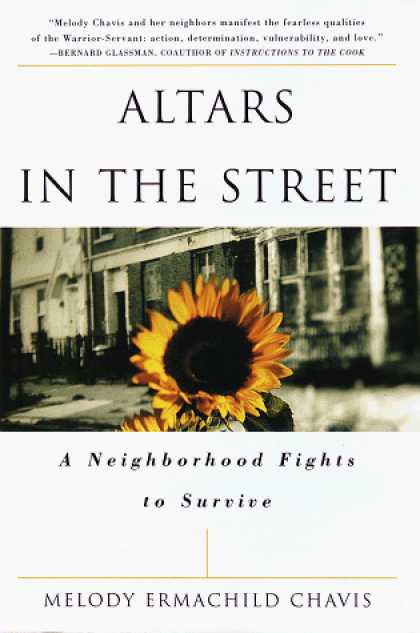
"Altars in the Street" by Melody Chavis was INCREDIBLE. I couldn't put it down. It made me cry; it infested my dreams. It changed the way I think about neighborhood violence forever. Melody Chavis moved into a quiet interracial neighborhood on Alma Street in Berkeley in the '80s, raised her kids, gardened... and became a private investigator for murder cases. Chavis loved her neighbors and the community, but when the crack trade exploded on her street, on her block, she knew she had to do something. Along with other friends and neighbors, Chavis formed a coalition to get drug dealing off her street, but at the same time, more and more people she knew were becoming victims of violence, addicts, getting into trouble. Kids she tutored went to bed hungry because their parents couldn't take care of them. Poor teenagers with no options found themselves seduced by possibilities of earning $200 an hour for dealing. One of Chavis' close friends, big-hearted single mom Ruth, who used to be in the coalition against drugs, became an addict too. But police and local government didn't care about Alma Street, so it was up to residents and social worker Shyaam to do what they could. Chavis took her love for gardening and turned it into an after school program for youths, but meanwhile the neighborhood was becoming much more dangerous. Gunshots at night. Deaths on the street. Constant sirens blaring up and down the road at 3 AM. The African American community was making way for a crack generation.
But this book is much more than a story of the tragedy of the urban ghetto and destructive nature of drug use. This is a book about the identity of home, and how long you can hold onto it before you have to let go. Despite the violence and the terrors of Alma Street, Chavis loves her home, and as I read I understood her rationale for staying, and admire her tenacity to make change. In her work as a private investigator, Chavis also represented Jarvis Masters, a man sentenced to the death penalty for allegedly aiding in the killing of a prison guard, and I was amazed to find online an entire website, dedicated to freeing him. Though Chavis worked with him nearly two decades ago, her efforts to challenge the court's decision still live on. Also, when Chavis became a Buddhist, she helped Jarvis follow that path as well. Jarvis is still on death row, waiting to hear the results of his appeal, and has had two books published - most recently, "That Bird Has My Wings." Check out his website to read more about his fascinating, and tragic, story.
I found Chavis' story incredibly inspiring, despite the fact that in the end, she wasn't able to decrease the violence on her street. I think something we could all learn from, especially people in a place as politically minded as Oberlin, Chavis' will to do something about problems in her surroundings, and not just sit there talking about it.
I will post my reflective essay about the book once I finish editing it.


No comments:
Post a Comment