Hello. Well, here is the story I was supposed to write first. Oops, things got a little out of order. Anyway, here it is. Hope it's okay. It's still kind of draft-y.
In The Rubble
The first thing that burned was the porch. Clouds of black smoke overtook it, rubbing the wood raw until it collapsed. The second thing that burned was the kitchen, and then, according to the fire men, the power cords set on fire, like some living vengeful creature, taking with it wall-to-wall carpets, wood floors, and the bed frame. The television, bookshelves, and the dining room table. The fire burned the sheets on the bed and the throw rug in the bathroom. Maybe the fourth or fifteenth or fiftieth things to burn were the suitcases under the bed, which Tad had been packing for weeks, ready to make the quick escape he’d been planning.
Lenora and Jamie had been at home. She’d interrupted him from a weekend work meeting to call him from a payphone, and Tad answered sourly.
“Tad,” she began in a panic, before Tad could even say hello. “Did you hear on the radio? There’s a fire –”
Typical Lenora, interrupting him at work, talking too loud, paranoia. “Lenora, I know. They put it out yesterday –”
“No, they didn’t. We saw it, this big smoke cloud, and we had to leave the house. We packed some bags but we didn’t know what you’d want –”
“Lenora, what are you talking about? Are you sure?”
“Of course I’m sure, what do you think, me and everyone else on our street just hallucinated a giant smoke cloud? Everyone evacuated. The firemen won’t let us back up there until who knows how long… nobody knows what’s going on. We drove down the hill, we’re in Berkeley. You’ve got to come meet us.”
“Are you – what? Are you and Jamie alright?” It might not be so bad, he rationalized. It would postpone his plans a week, maybe. Lenora would freak out over some burned shrubs, maybe, and Jamie might be a little scared, but she was a tough kid, nothing would be changed. Within a week he could be halfway across the country.
But when Tad returned to the meeting he found the conference room empty. “Tad,” his coworker Reese said from behind him. “Boss says we’re out for the day. Big fire in the Oakland Hills. Apparently there’s a chance it might jump the freeway, head over here. So we get our Saturday after all.”
“Oakland Hills?” Tad repeated. “I – I live in the Oakland Hills. That was my wife on the phone. She said they had to evacuate the house…”
“You live in the Oakland Hills? I thought that was Peter. Thought you lived over by the Claremont.”
“No,” Tad replied slowly, trying not to worry. For the first time he entertained the possibility that something far worse than burned shrubs awaited him. Maybe as he stood there calmly in his office building, everything from the tuxedo he’d gotten married in to his father’s Purple Heart in the attic was burning. Plans, certificates, insurance. “She says no one knows anything yet. They aren’t allowed to go back up.” Tad thought: what if I’m never able to enter my house again?
He left Reese without saying goodbye, and walked purposefully to his blue Mercedes he’d saved up to buy when his finance consulting job had become lucrative. Though Lenora had told him to meet at the corner of Shattuck and University, Tad found himself driving instinctively towards home, but every entrance up the hill was blocked. The smoke cloud ahead of him seemed to accumulate gradient and density as he approached. Maybe if he got out of the car, he could climb up the mountain, see if his carefully packed bag of travel toiletries under the bed had survived. He longed for the temporary simplicity of hotel room counters, to business trips away from the clutter. But without shaving tools and his toothbrush or even clean boxers, he could think of hardly anything relieving aside from being alone with his comforts.
Dutifully, Tad drove, and soon caught sight of his wife’s red Volvo, doors opened, her sandaled feet resting on the concrete. He hadn’t really noticed the heat until he saw her red sandals, and the pink of her legs in contrast with her shell-white shorts. He hadn’t really realized, until that moment, that they were stranded until further notice.
“Oh, Tad,” Lenora sat up, shielding her eyes from the sun with her hand. “I’m so glad you’re here. I’m just…” She took off her sunglasses to reveal an even redder face, her eyes puffy at the corners. “I’m falling apart.”
“Don’t be dramatic,” he muttered. “It’ll just upset Jamie.” But Jamie, in the backseat, appeared quite calm, as if this was just another midday adventure.
“Daddy!” She exclaimed from her car seat. “Did you bring Ralfie Bear?” At six, Jamie was a small child, still too small to sit on the regular seat. “I left Ralfie Bear at home. Do you have him?”
Tad would remember years later that there was nothing quite like the watchful eye of a six year old to make you feel guilty. “I’m sorry, sweetheart. I didn’t get Ralfie. I couldn’t. But I’m sure he’ll be fine.”
“I don’t know,” Jamie frowned. “I hope so.”
“What are we going to do?” Lenora asked, wiping sweat from her forehead agitatedly. “Where are we going to stay tonight? What if everything’s gone, forever?”
“We’ll stay in a hotel tonight,” he decided. “It’ll be like a little vacation. We’ll be back at home tomorrow.” He smiled at Jamie, though he felt the words twist inside of him, as he thought of the permanent vacation away from them, away from her, that he’d been planning.
They chose a clean, quiet Best Western in the flatlands, and within an hour were with room key, and, after explaining their situation to the receptionist, complimentary toothbrushes and shaving supplies. Lenora and Jamie had packed their own toothbrushes and change of clothes from the house, but hadn’t thought to pack some of Tad’s things. “I know how you hate it when I get into your stuff,” Lenora explained, but Tad was incensed. “Everyone’s always just in it for themselves,” he grumbled under his breath.
While Lenora and Jamie went to get pizza, Tad browsed through Longs to stock up on whatever he’d need until the morning. He walked aimlessly down aisle after aisle, not knowing what he needed and what he could live without. In his briefcase he only had financial reports and his pager. He found a pack of white Hanes t-shirts, and headed towards check-out. He thought to himself, I have dozens of t-shirts at home. I don’t need these, and without letting himself reconsider, put the t-shirts on a shelf and walked out of the store.
When they arrived back to the hotel, Lenora put slices of pizza on pieces of toilet paper and served it to Tad and Jamie on the bed. They flipped on the television, where the news blared, and pictures of flames dominated the news. “Firemen have reported that most of the houses in the Oakland Hills have burned. Residents will not be allowed to enter the burn site until the firemen are sure the fire is out.” Cut to a harried-looking resident. “We almost didn’t get out in time,” the person, a middle-aged woman with gray hair, said. “My mother is very old, and it’s hard to move her around, so we didn’t want to move unless we were sure…”
“Mommy,” Jamie whimpered. “Is our house gone forever?”
On the news, the newscaster was saying, “Some houses may not have been effected by the fire, officials say. But everywhere north of…” Jamie started to cry, and Lenora shut off the television.
“Let’s go to sleep,” she instructed.
After Jamie had fallen into a restless sleep, Tad and Lenora got ready for bed at the bathroom’s his-and-her sinks. In a bathrobe with no makeup and her hair pulled back, Lenora looked her least glamorous – that was something Tad had to get used to when they first got married. The first time he’d seen her, at a club, she’d been her most glamorous, in a short sequined dress, her hair tousled in dirty-blonde waves, the dark light of the room making her teeth sparkle. She’d been laughing, sitting with friends, but the club was so loud Tad felt like he was watching a movie on mute and that he’d never be able to speak to her through the television screen. Now Tad had to somehow equate the woman he’d first seen, with the woman rubbing anti-aging cream under her eyes, the skin of her thighs saggy after childbirth. Maybe he couldn’t do that.
She wouldn’t stop talking: “I just worry, you know, about Jamie. She could be really traumatized by this. I just don’t know how much we should tell her. I don’t want to lie to her, but I don’t want her to think that this kind of thing happens all the time and that she should always be worried something terrible is going to happen. And when she keeps asking about her toy bear? I mean, the chances that bear didn’t burn… next to nil. But seriously, Tad, what’s going to happen if we go up there and everything’s gone?”
“Don’t say that,” Tad whispered harshly. “Our house hasn’t burned down. It just hasn’t.”
“But Tad –” She turned to him, looking skeptical.
“No. Lenora.” He grabbed her wrists for emphasis. “It’s not true. Our house is fine. In fact, tomorrow we’ll go back up. To hell with what the firemen say. We’ll walk up there.”
“Fine,” she said. “Okay.” She shifted in her robe, shying away from him. He screwed the cap onto his sample toothpaste from the hotel and swung the door open, bathing the dark room in light. “…Goodnight, Tad,” he heard her say as he shut the door behind him.
As he climbed into bed, he looked over at Jamie, who appeared to be asleep, her wavy blonde hair like a halo around her face, little hands in fists around the top of the blankets. She looked just like her mother, he thought. “Daddy,” she whimpered suddenly.
“Yes, sweetheart?” He mumbled.
“Is everything going to be okay?” She implored. Her eyes were wide open now, like she expected him, and only him, to know the answer unequivocally.
“Of course, Jamie,” he struggled to say.
And then it was morning.
Tad woke as he had for many months, thinking, will I leave today? But then he looked around, realized where he was, remembered what had happened, and he knew it wouldn’t be.
Jamie and Lenora were already awake. “We’re going to drive down to the corner where we can see the hills,” she said. Tad mumbled something, and, defeated, fell back asleep.
“Daddy!” Jamie shrieked, jostling him. “Daddy, you said it was gonna be okay! You said!”
Tad sat up quickly, rubbing his eyes. Jamie, her face red and tear-streaked, sat at the end of the bed. “Jamie, calm down –” Lenora started to say. “Tad, we went down to go see what was going on, and we could see from the corner. The hills are still covered in smoke… the fireman we saw said things didn’t look good… he said that most of the houses on Bristol are… completely decimated.” She sat down on the bed too.
Jamie ignored her. “You lied to me, Daddy! You lied!” She yelled. Her piercing voice hurt Tad’s ears, and he didn’t know what to do, or what to say. He didn’t have the answer.
“Jamie, I –”
“You told me our house was okay! You promised me!”
“You promised her?” Lenora repeated. “Tad, you… how could you?” She stood up and walked slowly towards the bathroom, looking back at him with what looked like disgust. Tad put his head in his hands, trying to block out Jamie’s screaming. She was really throwing a tantrum now, pulling her hair and stomping the ground, tugging at Tad’s arm.
“I’m sorry, I’m sorry,” He kept muttering. “I didn’t know.” But it was almost as if he wasn’t even there, as if he was a completely separate unit from his wife and daughter, a ghostly skeleton of some ideal, father, and husband, that didn’t actually exist. He was stuck in some mold that he had to squeeze to fit into, squeeze so his neck ached and his muscles burned. Lenora was pushing him, and Jamie was pulling him, when all he wanted was to escape from it for good, or break it entirely.
Slowly, Jamie tired of her tantrum, and soon she was merely whimpering, her face in her pillows. Lenora was still in the bathroom, and Tad had to go to the bathroom, so he knocked on the door. “Lenora,” he said. “I need to get in there.”
“…Door’s unlocked,” she replied, her voice muffled. He opened the door to find her sitting on the closed toilet seat, staring at the wall. “Tad, I can’t believe you promised –”
“Listen, I don’t want to hear about it,” he retorted.
“No,” Lenora said emphatically. “No, you don’t ever want to hear about anything that might cause you any kind of disservice, or think about anything that might not be absolutely perfect and easy for you. You don’t make promises to a little girl, our daughter, and then let her down. You can’t do that.”
“I didn’t know what to say!” He cried.
“You say, ‘I don’t know.’ You say, ‘it will be okay, as long as we have each other.’ If that’s even true. You haven’t exactly been doing much to help out.”
“Don’t call me selfish, I spend nine hours a day –”
Lenora pushed him in the chest firmly, and said in a strange voice he’d never heard before: “You think I don’t know.”
“D-don’t know?”
“You abhor us. You’re going to leave us. You just want your happy little bachelor life. And you’re going to get it. And you’re going to be so alone.”
“Lenora, shut up!” He yelled. “Stop it!”
“Admit it,” she whispered, still in that strange, vindictive tone. “You’re going to leave us.”
“H-how do you know?”
“Every time I do the laundry, there’s one less shirt. I’ve been finding things missing from the bathroom cabinet… I’ve known for ages.”
“Then – then – why didn’t you do anything about it?”
Her eyes filled with tears. “Maybe some stupid little part of me thought, oh, he’ll come to his senses, oh, he really loves me… well I was wrong, wasn’t I.” Tad was speechless.” But guess what? We don’t need you.”
And Tad left the hotel in yesterday’s suit, his wife and only daughter staring at him defiantly, hard.
#
Policemen drove the residents of the hills up to the sites of their houses a week later. The only thing that had been untouched was the water well, the words “East Bay Water Reservoir” still intact. The house was destroyed, and all that was left was black dirt. Tad got on his hands and knees, as if he were a common trash-diver, and found scraps of metal, from pans, from pots, from washers. He found a box, badly charred, in the ground, and when he opened it, something round and silver gleamed. It was his wedding ring. He wiped it on his shirt and found that it was in perfect condition, and he placed it in his pocket. It lay there in homage to what he had lost – to what he had given up.
Sunday, January 31

Tuesday, January 26
Winter Term Hiatus... oh, and some poems
On January 17, I sadly was required to leave Berkeley and return to my lovely home in Marin County, as my brother's roommates arrived and were rather surprised to find a random 19-year old girl on their couch. After all the excitement of my first semester at Oberlin, going home was a bit of a letdown, but coming back from Berkeley with still roughly three weeks until returning really put me in the dumps. Even my adorable dogs couldn't help, because they were usually soaking wet in the rain, which just finally stopped after about two weeks. Funny, because usually when I tell Oberlin kids where I'm from, they say, "Oh, so it'll be good to have some sun over break when we're freezing over here in Ohio/New Jersey/Connecticut/Michigan/Illinois." WELL, how does 42 degrees and rainy everyday sound? Well, for the sensitive writerly type, must admit, it can get depressing. And as most would realize, rain + boredom does not exactly equal inspiration. Hence, I've been kind of slacking off. I did read (okay, skim) a book called Berkeley at War: The 1960s and watch a movie about Berkeley in the 60s, in hopes of maybe writing a story about the hippies and the new Left and free speech debacle. But, funnily enough, what inspired me more was a TV show my family and I used to watch when I was in middle school, that finally, after five years, my brother was able to download online. The show is called "American Dreams," and it ran from 2002-2004. It takes place in Philadelphia, but it also takes place in, that's right... the turbulent 60s! Many of the plot lines are about old vs. new ideas about liberalism, race, relationships, politics, the Vietnam war, etc etc. However, I feel like so much about the 60s has already been said, and I'm struggling to find a new angle.

In the 1960's, a buncha dirty hippies advocated sex, drugs and rock 'n' roll. DIDJA KNOW THAT?? (Not a new angle.)
Though the part of my project about the 1991 Berkeley/Oakland fires was supposed to be done when I finished "The Fifth Book of Peace," I've somehow managed to not write my fire story. I wrote a draft a while back, but it wasn't going anywhere. I was finally able to interview my mom's friend, Priscilla, whose house burned down in the fire, and so I am currently, finally, writing the story. I'll hopefully have that done by the time I head over to Oberlin (I'm flying there in 6 days!! YAY!) and will post it here. But I have been working on some poems inspired by the poetry walk, and so I spose I'll paste those in. I'm not much of a poetry person, but I gave it the ol' college try. Get it?? Cuz I'm in college?? Okay, yeah, I know. I know.
1. Inspired by “Corrido Blanco” by Alfred Arteaga
You are born, little word, mine
into a harsh world.
You are born, my little word
into a world that bubbles in excess
of you, that still cannot decide what it wants to say –
You are born to be preceded by I, accompanied by but
phrased with finality.
You are born with emphasis that’s lowercase,
into tired grocery lists and get-well-soon cards.
You have the power of hurt, or the power of inspiration;
but you have not the power to kill.
Little word, you sacrifice yourself to misuse and misspellings.
you must prepare yourself to be mispronounced, to be
abused, to be followed by a punch or cry or yelp.
Little word you are born against guns much stronger than you.
The sounds of sirens, metal bars and stones,
you are born into a harsh world.
2. Inspired by “Lovers” by Witter Bynner
light acoustic melodies like flyaway hairs on her cheek
waft under the door from another room;
the girl can only hear the stroke of fingers on strings if she is
perfectly silent, only a crisp C from far away, or the glorious
melancholy of B minor with its lingering buzz;
but sheets crinkle and voices crack, and the
strain of listening to what may not be there
is taxing,
especially with eyes half-shut, sensations like color notes
and when he leaves the guitarist has ceased,
to quench himself – to sleep.
3. Inspired by “from The Tempest” by William Shakespeare and “Notebook” by Denise Levertov
The show is over now,
the tear gas and gunshots, the festivities.
I watched as they doused a car in gasoline
with a click of a lighter better suited for marijuana
they had, we had,
administered destruction, like jungles we saw on tv
and gunshots.
And as I watched it burn I thought,
we have started our own war to stop the one
in Vietnam.
4. Inspired by the line “If Death has a beginning, does it also have an end?” by Ivan Arguelles
And if death is forever,
Why estar and not ser?
Does death occur in steps
or gradients?
Is it like drops into a cup
Or a litmus paper going blue to red
Then lying limply on the lab table?
In death do we fade to black
or do we just keep going and going?
Sometimes sudden collisions
or festering in clean white hospital beds:
the question not if but when.
Hope you enjoy! Any comments will make me smile at you!
In the 1960's, a buncha dirty hippies advocated sex, drugs and rock 'n' roll. DIDJA KNOW THAT?? (Not a new angle.)
Though the part of my project about the 1991 Berkeley/Oakland fires was supposed to be done when I finished "The Fifth Book of Peace," I've somehow managed to not write my fire story. I wrote a draft a while back, but it wasn't going anywhere. I was finally able to interview my mom's friend, Priscilla, whose house burned down in the fire, and so I am currently, finally, writing the story. I'll hopefully have that done by the time I head over to Oberlin (I'm flying there in 6 days!! YAY!) and will post it here. But I have been working on some poems inspired by the poetry walk, and so I spose I'll paste those in. I'm not much of a poetry person, but I gave it the ol' college try. Get it?? Cuz I'm in college?? Okay, yeah, I know. I know.
1. Inspired by “Corrido Blanco” by Alfred Arteaga
You are born, little word, mine
into a harsh world.
You are born, my little word
into a world that bubbles in excess
of you, that still cannot decide what it wants to say –
You are born to be preceded by I, accompanied by but
phrased with finality.
You are born with emphasis that’s lowercase,
into tired grocery lists and get-well-soon cards.
You have the power of hurt, or the power of inspiration;
but you have not the power to kill.
Little word, you sacrifice yourself to misuse and misspellings.
you must prepare yourself to be mispronounced, to be
abused, to be followed by a punch or cry or yelp.
Little word you are born against guns much stronger than you.
The sounds of sirens, metal bars and stones,
you are born into a harsh world.
2. Inspired by “Lovers” by Witter Bynner
light acoustic melodies like flyaway hairs on her cheek
waft under the door from another room;
the girl can only hear the stroke of fingers on strings if she is
perfectly silent, only a crisp C from far away, or the glorious
melancholy of B minor with its lingering buzz;
but sheets crinkle and voices crack, and the
strain of listening to what may not be there
is taxing,
especially with eyes half-shut, sensations like color notes
and when he leaves the guitarist has ceased,
to quench himself – to sleep.
3. Inspired by “from The Tempest” by William Shakespeare and “Notebook” by Denise Levertov
The show is over now,
the tear gas and gunshots, the festivities.
I watched as they doused a car in gasoline
with a click of a lighter better suited for marijuana
they had, we had,
administered destruction, like jungles we saw on tv
and gunshots.
And as I watched it burn I thought,
we have started our own war to stop the one
in Vietnam.
4. Inspired by the line “If Death has a beginning, does it also have an end?” by Ivan Arguelles
And if death is forever,
Why estar and not ser?
Does death occur in steps
or gradients?
Is it like drops into a cup
Or a litmus paper going blue to red
Then lying limply on the lab table?
In death do we fade to black
or do we just keep going and going?
Sometimes sudden collisions
or festering in clean white hospital beds:
the question not if but when.
Hope you enjoy! Any comments will make me smile at you!
Tuesday, January 19
Drawing Inspiration from "The Fifth Book of Peace"
So over the last week or so, I have been doing a lot more reading than writing. Here are some quotes and ideas I've collected from my various readings that I found inspiring.
First of all, I feel I have wronged Maxine Hong Kingston by calling her wishy-washy. In fact, looking through my Winter Term notebook, I found that I'd written down some quotes that were pretty awesome. In one section, Kingston talks about a class she taught, and a student who raised his hand and said: "The story of our generation is that we are always on the move. We travel to every state and country, and do not commit to any one place, to Aristotelian unities of time and place. The setting of our novels will be everywhere." I think this is a really insightful point - definitely a possible basis for a story. I think moving around a lot is a theme of times when America is alienated, when the culture is fractured. In the Gilded Age, many writers moved to Europe, and much of The Fifth Book of Peace is about a family's move to Hawaii from the conflict-heavy, war-protesting Berkeley. Of course, America's disenfranchisement by many nations worldwide thanks to our War on Terror, has driven thousands to leave the country.
Kingston also talks about William Carlos Williams' law of poetry. He says, "Listen to the ground of the Americas, and hear her voice." Her best ideas are the ones she cites and references, which struck me much more powerfully and helped her credibility. She discusses the Outline of Caodism, that "humanity lives in sufferings," and Prince Han of Western Thebes' quote about going into battle. He says, "you determine to go forward. Shuddering seizes you, your soul lies in your hand." I think that even though I didn't find all of Kingston's book persuasive, her ability to cite so extensively really helped her cause. From a writer's perspective, points of reference such as the ones I just mentioned, can really help widen a writer's scope of view.
I think that's enough for now, but I want to post more quotes from the poetry I read on my walk.
First of all, I feel I have wronged Maxine Hong Kingston by calling her wishy-washy. In fact, looking through my Winter Term notebook, I found that I'd written down some quotes that were pretty awesome. In one section, Kingston talks about a class she taught, and a student who raised his hand and said: "The story of our generation is that we are always on the move. We travel to every state and country, and do not commit to any one place, to Aristotelian unities of time and place. The setting of our novels will be everywhere." I think this is a really insightful point - definitely a possible basis for a story. I think moving around a lot is a theme of times when America is alienated, when the culture is fractured. In the Gilded Age, many writers moved to Europe, and much of The Fifth Book of Peace is about a family's move to Hawaii from the conflict-heavy, war-protesting Berkeley. Of course, America's disenfranchisement by many nations worldwide thanks to our War on Terror, has driven thousands to leave the country.
Kingston also talks about William Carlos Williams' law of poetry. He says, "Listen to the ground of the Americas, and hear her voice." Her best ideas are the ones she cites and references, which struck me much more powerfully and helped her credibility. She discusses the Outline of Caodism, that "humanity lives in sufferings," and Prince Han of Western Thebes' quote about going into battle. He says, "you determine to go forward. Shuddering seizes you, your soul lies in your hand." I think that even though I didn't find all of Kingston's book persuasive, her ability to cite so extensively really helped her cause. From a writer's perspective, points of reference such as the ones I just mentioned, can really help widen a writer's scope of view.
I think that's enough for now, but I want to post more quotes from the poetry I read on my walk.
Saturday, January 16
Reflective Essay on "Altars in the Street"
Here is my first finished turn-in ready part of my Winter Term project:
I was born and raised in a quiet, safe neighborhood with no crime, with a mother and father who have been married for over twenty years and a brother who suffers from Muscular Dystrophy, a degenerative muscle weakness so severe he requires assistance to eat and even go to the bathroom. On Sunday mornings my dad and I sit outside, and he admires the yard, and our two gorgeous golden retrievers who play in it – “Laura,” he says often. “We are so lucky to live in such a beautiful place.” And he’s right.
However, my neighborhood is completely homogenous, a place where neighbors don’t know each other’s names, and where, thanks to a stringent community association’s ruling, we are only allowed to have white doors. This compared to the subject matter of Melody Ermachild Chavis’ memoir Altars in the Street: A Neighborhood Fights to Survive, which chronicles her struggles to get crack cocaine off her block on Alma Street, located in South Berkeley’s Lorin district, not even thirty minutes from my idyllic home in Kentfield.
I admit that I am naïve when it comes to street smarts, and that only in the past two weeks living in my brother’s apartment half a block from Telegraph Avenue have I gained any kind of handle on the Bay Area’s underground transit system, the BART. To get to San Francisco from Berkeley, something only possible by private car from my hometown Marin, you take the Fremont-Richmond line to MacArthur Station in Oakland, where you transfer to the SFO-Millbrae line. This trip includes stops in Oakland City Center, West Oakland, and San Francisco’s Civic Center, in the heart of the Tenderloin, an area riddled with homelessness, drugs, and prostitution. Yet it also takes me to Union Square, where Tiffany’s boasts a five-story mega-store and lies caddy-corner to a high-rise Saks Fifth Avenue. This juxtaposition exists in cities worldwide, but perhaps the Bay Area serves as a representative example. Marin County, north of San Francisco, is the eleventh highest-income county in the United States, (Forbes) but its residents exist within twenty miles of two of the country’s most dangerous cities – Richmond and Oakland (CQ Press). Despite this proximity, I have never been to either Richmond or Oakland, though I like to think that my family is somewhat less squeaky-clean than some – my Dad grew up on tough Prospect Avenue in the Bronx, and I was born in Berkeley, where my parents resided for over twenty years. But in reality, my Good Samaritan efforts, such as volunteering at Glide Memorial Church making sandwiches for the homeless have been short-lived. Half a block on O’Farrell Avenue, even at ten in the morning with my dad was enough for me. I feel cowardly admitting this, and thinking about how I’ve been carrying granola bars in my car to give to homeless people who hold signs at busy intersections for years, but I’ve never actually opened my window. I still remember seeing Fiddler on the Roof at the Orpheum theater near the Tenderloin when I was nine, when I spotted an old woman on the corner who I thought was actually already dead, and a bearded black man peered at my friend’s face and said, “Well aren’t you pretty?” I remember later finding a fishing hook stuck to the bottom of my Mary-Janes. I want to help people in need, and I donate to the National Alliance to End Homelessness and Save the Children annually, but there is only so much I can do without getting truly involved – and that probably includes volunteering in bad neighborhoods.
The constant dilemma for me, and for my mother I’m sure, is safety versus open-mindedness. Sure, it’s likely that 99% the homeless people on Telegraph Avenue are harmless, but what about that other 1%? Still I feel pangs of guilt for days after seeing one homeless man in a sleeping bag outside of the San Francisco Public Library. This dilemma is one that pierced every day of Melody Chavis’ life on Alma Street. Most of her neighbors were kind, giving people, and when she moved in, it was a quiet interracial neighborhood. But in the late 80s, crack became America’s newest drug of choice, sweeping the waves of addiction in its users to alarming new levels. Crack brought to Alma Street not only addiction, but violence – on the streets and in households alike. Melody’s sympathies went out especially to the children of crack addicts, such as eight-year old Gideon, who she and her daughter tutored. Gideon wanted to do well, but his mother Angela was an addict, and her boyfriend, Askari violent and daunting. Gideon went days without being fed, and when he collected $50 for a school field trip, it was stolen from underneath his head as he slept. Chavis, an advocate for social justice, took part in many committees seeking treatment for the parents, and activities to keep the kids out of trouble. But then there were guns, becoming more and more common as the years went by, until one night Chavis and her husband heard the sounds of a young man, Ian Freedman, dying outside their window, the shape of his body outlined in chalk on their sidewalk in silent memoriam forever. As the violence skyrocketed, her neighbors and friends of so many years began leaving the neighborhood – when did safety outweigh diversity, outweigh ones idea of home?
At the end of the book, when Chavis finally decided to leave, I cried for her, and felt that though I can’t relate to living in a dangerous environment, I understood that she was leaving her home. Hundreds of committee meetings, letters, and cases later, despite the relative success of her gardening program for youths, she was driven out by her own feelings of being in danger, when her fright and paranoia overtook her. This does not add any optimism to the plight of improving ghettos, or getting the impoverished off their feet. And in California, a state drowning in debt, the issue of homelessness can hardly expect much financial aid. For Chavis, the only way to “solve” these problems was to escape them.
#

Last spring, I drove up to far Northern California to visit my friend Emily who I met at a summer writing camp several years ago. Her town, sleepy Ferndale, was a logging community, composed of a block of cute storefronts and expanses of beautiful hiking areas, where cliffs jutted out into strips of beach and ocean, where we saw a rainbow emerging from the clouds. Emily drove me through Eureka, the biggest city in Northern California, where all the signs on the 101 going north point towards, and as we drove past blocks and blocks of cheap motels, Emily told me that all the meth addicts squatted there. That the meth addicts were everywhere, and they sometimes ran into oncoming traffic, and you couldn’t go to Eureka after it got dark out. Like crack, meth is relatively cheap, and has replaced crack in many areas as the up-and-coming big killer for individuals and subsequent generations. Eureka is located in the one of the most beautiful areas of land in the country, and yet, like Alma Street, or the Tenderloin, is riddled with drug use and homelessness that threaten to destroy not only its reputation and economy, but existence.
As a street-ignorant, sheltered teenager, I have no experience of waking up in the middle of the night to gunshots, or watching crack trades from my windowsill. But in Altars in the Street, Chavis mentions a Buddhist principle: that while one man starves, a rich man is committing suicide. That all suffering is equal. Chavis chose to help alleviate the suffering in her environment, on her street, and so it is important for me also to help look to the suffering in my immediate environment, and try to do something about it. After spending two weeks straight with my brother, observing his difficult daily routine and dozens of medical devices – the Coughalator, the ventilator, the bi-Pap sleeping mask, the electric wheelchair my family spent three years customizing – I’ve decided that I will make a commitment to devoting my time and energy into looking for ways for people with similar conditions who are less economically fortunate to get the equipment they need. I don’t know how yet, but in between frazzled dreams triggered by Altars in the Street, I thought of this idea, and I imagined collecting hundreds of wheelchairs to give to people who need them. This is just a figment in my mind as of now, but even talking to Philip, who is incredibly lonely, and making him smile, perhaps I am doing a part to end suffering – in my own tiny way.
I was born and raised in a quiet, safe neighborhood with no crime, with a mother and father who have been married for over twenty years and a brother who suffers from Muscular Dystrophy, a degenerative muscle weakness so severe he requires assistance to eat and even go to the bathroom. On Sunday mornings my dad and I sit outside, and he admires the yard, and our two gorgeous golden retrievers who play in it – “Laura,” he says often. “We are so lucky to live in such a beautiful place.” And he’s right.
However, my neighborhood is completely homogenous, a place where neighbors don’t know each other’s names, and where, thanks to a stringent community association’s ruling, we are only allowed to have white doors. This compared to the subject matter of Melody Ermachild Chavis’ memoir Altars in the Street: A Neighborhood Fights to Survive, which chronicles her struggles to get crack cocaine off her block on Alma Street, located in South Berkeley’s Lorin district, not even thirty minutes from my idyllic home in Kentfield.
I admit that I am naïve when it comes to street smarts, and that only in the past two weeks living in my brother’s apartment half a block from Telegraph Avenue have I gained any kind of handle on the Bay Area’s underground transit system, the BART. To get to San Francisco from Berkeley, something only possible by private car from my hometown Marin, you take the Fremont-Richmond line to MacArthur Station in Oakland, where you transfer to the SFO-Millbrae line. This trip includes stops in Oakland City Center, West Oakland, and San Francisco’s Civic Center, in the heart of the Tenderloin, an area riddled with homelessness, drugs, and prostitution. Yet it also takes me to Union Square, where Tiffany’s boasts a five-story mega-store and lies caddy-corner to a high-rise Saks Fifth Avenue. This juxtaposition exists in cities worldwide, but perhaps the Bay Area serves as a representative example. Marin County, north of San Francisco, is the eleventh highest-income county in the United States, (Forbes) but its residents exist within twenty miles of two of the country’s most dangerous cities – Richmond and Oakland (CQ Press). Despite this proximity, I have never been to either Richmond or Oakland, though I like to think that my family is somewhat less squeaky-clean than some – my Dad grew up on tough Prospect Avenue in the Bronx, and I was born in Berkeley, where my parents resided for over twenty years. But in reality, my Good Samaritan efforts, such as volunteering at Glide Memorial Church making sandwiches for the homeless have been short-lived. Half a block on O’Farrell Avenue, even at ten in the morning with my dad was enough for me. I feel cowardly admitting this, and thinking about how I’ve been carrying granola bars in my car to give to homeless people who hold signs at busy intersections for years, but I’ve never actually opened my window. I still remember seeing Fiddler on the Roof at the Orpheum theater near the Tenderloin when I was nine, when I spotted an old woman on the corner who I thought was actually already dead, and a bearded black man peered at my friend’s face and said, “Well aren’t you pretty?” I remember later finding a fishing hook stuck to the bottom of my Mary-Janes. I want to help people in need, and I donate to the National Alliance to End Homelessness and Save the Children annually, but there is only so much I can do without getting truly involved – and that probably includes volunteering in bad neighborhoods.
The constant dilemma for me, and for my mother I’m sure, is safety versus open-mindedness. Sure, it’s likely that 99% the homeless people on Telegraph Avenue are harmless, but what about that other 1%? Still I feel pangs of guilt for days after seeing one homeless man in a sleeping bag outside of the San Francisco Public Library. This dilemma is one that pierced every day of Melody Chavis’ life on Alma Street. Most of her neighbors were kind, giving people, and when she moved in, it was a quiet interracial neighborhood. But in the late 80s, crack became America’s newest drug of choice, sweeping the waves of addiction in its users to alarming new levels. Crack brought to Alma Street not only addiction, but violence – on the streets and in households alike. Melody’s sympathies went out especially to the children of crack addicts, such as eight-year old Gideon, who she and her daughter tutored. Gideon wanted to do well, but his mother Angela was an addict, and her boyfriend, Askari violent and daunting. Gideon went days without being fed, and when he collected $50 for a school field trip, it was stolen from underneath his head as he slept. Chavis, an advocate for social justice, took part in many committees seeking treatment for the parents, and activities to keep the kids out of trouble. But then there were guns, becoming more and more common as the years went by, until one night Chavis and her husband heard the sounds of a young man, Ian Freedman, dying outside their window, the shape of his body outlined in chalk on their sidewalk in silent memoriam forever. As the violence skyrocketed, her neighbors and friends of so many years began leaving the neighborhood – when did safety outweigh diversity, outweigh ones idea of home?
At the end of the book, when Chavis finally decided to leave, I cried for her, and felt that though I can’t relate to living in a dangerous environment, I understood that she was leaving her home. Hundreds of committee meetings, letters, and cases later, despite the relative success of her gardening program for youths, she was driven out by her own feelings of being in danger, when her fright and paranoia overtook her. This does not add any optimism to the plight of improving ghettos, or getting the impoverished off their feet. And in California, a state drowning in debt, the issue of homelessness can hardly expect much financial aid. For Chavis, the only way to “solve” these problems was to escape them.

Last spring, I drove up to far Northern California to visit my friend Emily who I met at a summer writing camp several years ago. Her town, sleepy Ferndale, was a logging community, composed of a block of cute storefronts and expanses of beautiful hiking areas, where cliffs jutted out into strips of beach and ocean, where we saw a rainbow emerging from the clouds. Emily drove me through Eureka, the biggest city in Northern California, where all the signs on the 101 going north point towards, and as we drove past blocks and blocks of cheap motels, Emily told me that all the meth addicts squatted there. That the meth addicts were everywhere, and they sometimes ran into oncoming traffic, and you couldn’t go to Eureka after it got dark out. Like crack, meth is relatively cheap, and has replaced crack in many areas as the up-and-coming big killer for individuals and subsequent generations. Eureka is located in the one of the most beautiful areas of land in the country, and yet, like Alma Street, or the Tenderloin, is riddled with drug use and homelessness that threaten to destroy not only its reputation and economy, but existence.
As a street-ignorant, sheltered teenager, I have no experience of waking up in the middle of the night to gunshots, or watching crack trades from my windowsill. But in Altars in the Street, Chavis mentions a Buddhist principle: that while one man starves, a rich man is committing suicide. That all suffering is equal. Chavis chose to help alleviate the suffering in her environment, on her street, and so it is important for me also to help look to the suffering in my immediate environment, and try to do something about it. After spending two weeks straight with my brother, observing his difficult daily routine and dozens of medical devices – the Coughalator, the ventilator, the bi-Pap sleeping mask, the electric wheelchair my family spent three years customizing – I’ve decided that I will make a commitment to devoting my time and energy into looking for ways for people with similar conditions who are less economically fortunate to get the equipment they need. I don’t know how yet, but in between frazzled dreams triggered by Altars in the Street, I thought of this idea, and I imagined collecting hundreds of wheelchairs to give to people who need them. This is just a figment in my mind as of now, but even talking to Philip, who is incredibly lonely, and making him smile, perhaps I am doing a part to end suffering – in my own tiny way.
Thursday, January 14
The Most Exciting Post this Blog Will Ever Have (maybe)


Today, I went to the Berkeley Poetry Walk on Addison Street between Shattuck and Milvia, about a block away from the Downtown Berkeley BART station. I checked out a handy book from the library, edited by former US Poet Laureate and Bolinas-native, general bad-ass, my favorite poet ever, Robert Hass. My favorite poem by him, "Spring Rain" goes a little something like this:
Spring Rain
Now the rain is falling, freshly, in the intervals between sunlight,
a Pacific squall started no one knows where drawn east as the drifts of
warm air make a channel;
it moves its own way, like water or the mind,
and spills this rain passing over. The Sierras will catch it as last snow
flurries before winter, observed only by the wakened marmots at ten
thousand feet,
and we will come across it again as larkspur and penstemon sprouting
along a creek above Sonora Pass next August,
where the snowmelt will have trickled into Dead Man's Creek and the
creek spilled into the Stanislaus and the Stanislaus into the San Joaquin and the San Joaquin into the slow salt marshes of the bay.
That's not the end of it: the gray jays of the mountains eat larkspur seeds, which cannot propagate otherwise.
To simulate the process, you have to soak the gathered seeds all night in the acids of coffee
and then score them gently with a very sharp knife before you plant them in the garden.
You might use what was left of the coffee we drank in Lisa's kitchen visiting.
There were orange poppies on the table in a clear glass vase, stained
near the bottom to the color of sunrise;
the unstated theme was the blessedness of gathering and the blessing of dispersal---
it made you glad for beauty like that, casual and intense, lasting as long
as the poppies last.
But that poem isn't on the poetry walk. With manual in hand, fellow Oberlin student Max and I braved the streets, where we were quickly accosted by... two friendly college students with clipboards. I, Laura, am now officially registered to vote in California, after registering in Ohio months ago. Oops. So we started reading some poems. Some were better than others.
 In my trusty manual, I found out that the author, Gelett Burgess, wrote a sequel to "Purple Cow," that went:
 Ah yes, I wrote the 'Purple Cow'
I'm sorry now I wrote it;
But I can tell you anyhow,
I'll kill you if you quote it.
Apparently this guy went to MIT. I hope he was good at math. Some of the poems were really interesting though, and soon I will be writing some inspired by those.
 One of my favorites was short and sweet, written by an unknown Ohlone poet.
Some of the poems were colorful. Even Max, who is illiterate, gave it a shot:

After that, we went to Berkeley used bookstore Moe's books, which has four floors of books! We were disappointed to find that the signs leading to subsequent floors said "more books" as opposed to "moe books." I mean, come on, that was a wasted pun opportunity.
(P.S. Actually, I'm pretty sure Max can read.)
My crazy schedule, and exciting poetic adventures with trusty sidekick.
First of all, my crazy schedule. I wrote it all out and was super OCD about it. My dad is probably proud. (Slightly edited because no one cares that I have a dentist appointment on January 29)
1/2/10 – move to Berkeley
1/3/10 – The Fifth Book of Peace,
1/4/10 –The Fifth Book of Peace
1/5/10 – check out more books: Altars in the Street, Berkeley at War, Berkeley! A Literary Tribute, Berkeley’s Poetry Walk, write story #1
1/6/10 – write story #1, start Altars in the Street
1/7/10 – Cirque du Soleil, 4 PM
1/8/10 – Altars in the Street
1/9/10 – Altars in the Street, Laura and Philip Mission SF adventure
1/10/10 – finish Altars in the Street
1/11/10 – ride home, story/essay #2
1/12/10 – return to Berkeley, BLOG!
1/13/10 – Berkeley’s Poetry Walk introduction, Berkeley: A City in History selections
1/14/10 – Berkeley’s poetry walk; read Berkeley: A City in History, write poems inspired by those in the Poetry Walk
1/15/10 – write poems inspired by those in the poetry walk
1/16/10 – last full day at Phil’s. Berkeley: A City in History, Berkeley! A Literary Tribute.
1/17/10 – Berkeley! A Literary Tribute, come back home officially.
1/18/10 – Berkeley! A Literary Tribute, brainstorm questions for mom's former roommate Priscilla, 6:30-8 PM, about Oakland fire, finish short story #1
1/19/10 – Family Story (#4), hopefully do some writing
1/20/10 – 1/26/10 – Portland trip. Continue reading Literary History, write family story (#4)
1/27/10 – Finish family story (#4)
1/28/10 – Watch “Berkeley in the 60s” documentary, update blog, etc.
1/29/10 – Short story #5, free choice story… possibly about Berkeley in the 60s?
1/30/10 – Short story #5, go to Berkeley to say goodbye to Philip!
1/31/10 – PACK
2/1/10 – FLIGHT TO OBERLIN, LEAVES AT 6:45 AM, STOPS IN LAS VEGAS, AKA I'M WAKING UP IN VEGAS!!! WHAT WHAT
SECONDLY, IN A SOON TO BE WRITTEN POST, IN HALF AN HOUR LAURA (AKA ME) AND HER TRUSTY BERKELEY-OBERLIN COHORT, MAX, TRAVEL TO A DISTANT LAND (SHATTUCK AVENUE) TO READ POETRY ON SIDEWALKS. SHOULD PROBABLY BE THE MOST EXCITING POST THIS BLOG WILL EVER HAVE.
1/2/10 – move to Berkeley
1/3/10 – The Fifth Book of Peace,
1/4/10 –The Fifth Book of Peace
1/5/10 – check out more books: Altars in the Street, Berkeley at War, Berkeley! A Literary Tribute, Berkeley’s Poetry Walk, write story #1
1/6/10 – write story #1, start Altars in the Street
1/7/10 – Cirque du Soleil, 4 PM
1/8/10 – Altars in the Street
1/9/10 – Altars in the Street, Laura and Philip Mission SF adventure
1/10/10 – finish Altars in the Street
1/11/10 – ride home, story/essay #2
1/12/10 – return to Berkeley, BLOG!
1/13/10 – Berkeley’s Poetry Walk introduction, Berkeley: A City in History selections
1/14/10 – Berkeley’s poetry walk; read Berkeley: A City in History, write poems inspired by those in the Poetry Walk
1/15/10 – write poems inspired by those in the poetry walk
1/16/10 – last full day at Phil’s. Berkeley: A City in History, Berkeley! A Literary Tribute.
1/17/10 – Berkeley! A Literary Tribute, come back home officially.
1/18/10 – Berkeley! A Literary Tribute, brainstorm questions for mom's former roommate Priscilla, 6:30-8 PM, about Oakland fire, finish short story #1
1/19/10 – Family Story (#4), hopefully do some writing
1/20/10 – 1/26/10 – Portland trip. Continue reading Literary History, write family story (#4)
1/27/10 – Finish family story (#4)
1/28/10 – Watch “Berkeley in the 60s” documentary, update blog, etc.
1/29/10 – Short story #5, free choice story… possibly about Berkeley in the 60s?
1/30/10 – Short story #5, go to Berkeley to say goodbye to Philip!
1/31/10 – PACK
2/1/10 – FLIGHT TO OBERLIN, LEAVES AT 6:45 AM, STOPS IN LAS VEGAS, AKA I'M WAKING UP IN VEGAS!!! WHAT WHAT
SECONDLY, IN A SOON TO BE WRITTEN POST, IN HALF AN HOUR LAURA (AKA ME) AND HER TRUSTY BERKELEY-OBERLIN COHORT, MAX, TRAVEL TO A DISTANT LAND (SHATTUCK AVENUE) TO READ POETRY ON SIDEWALKS. SHOULD PROBABLY BE THE MOST EXCITING POST THIS BLOG WILL EVER HAVE.
Wednesday, January 13
READ THIS BOOK NOW
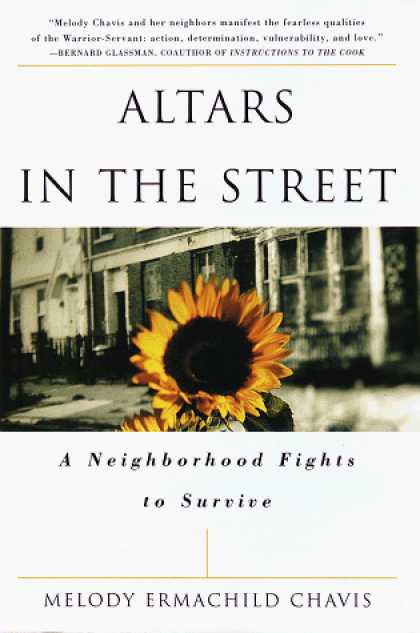
"Altars in the Street" by Melody Chavis was INCREDIBLE. I couldn't put it down. It made me cry; it infested my dreams. It changed the way I think about neighborhood violence forever. Melody Chavis moved into a quiet interracial neighborhood on Alma Street in Berkeley in the '80s, raised her kids, gardened... and became a private investigator for murder cases. Chavis loved her neighbors and the community, but when the crack trade exploded on her street, on her block, she knew she had to do something. Along with other friends and neighbors, Chavis formed a coalition to get drug dealing off her street, but at the same time, more and more people she knew were becoming victims of violence, addicts, getting into trouble. Kids she tutored went to bed hungry because their parents couldn't take care of them. Poor teenagers with no options found themselves seduced by possibilities of earning $200 an hour for dealing. One of Chavis' close friends, big-hearted single mom Ruth, who used to be in the coalition against drugs, became an addict too. But police and local government didn't care about Alma Street, so it was up to residents and social worker Shyaam to do what they could. Chavis took her love for gardening and turned it into an after school program for youths, but meanwhile the neighborhood was becoming much more dangerous. Gunshots at night. Deaths on the street. Constant sirens blaring up and down the road at 3 AM. The African American community was making way for a crack generation.
But this book is much more than a story of the tragedy of the urban ghetto and destructive nature of drug use. This is a book about the identity of home, and how long you can hold onto it before you have to let go. Despite the violence and the terrors of Alma Street, Chavis loves her home, and as I read I understood her rationale for staying, and admire her tenacity to make change. In her work as a private investigator, Chavis also represented Jarvis Masters, a man sentenced to the death penalty for allegedly aiding in the killing of a prison guard, and I was amazed to find online an entire website, dedicated to freeing him. Though Chavis worked with him nearly two decades ago, her efforts to challenge the court's decision still live on. Also, when Chavis became a Buddhist, she helped Jarvis follow that path as well. Jarvis is still on death row, waiting to hear the results of his appeal, and has had two books published - most recently, "That Bird Has My Wings." Check out his website to read more about his fascinating, and tragic, story.
I found Chavis' story incredibly inspiring, despite the fact that in the end, she wasn't able to decrease the violence on her street. I think something we could all learn from, especially people in a place as politically minded as Oberlin, Chavis' will to do something about problems in her surroundings, and not just sit there talking about it.
I will post my reflective essay about the book once I finish editing it.
But What about the First Four Books of Peace??

The first book I checked out for my Berkeley project was "The Fifth Book of Peace" by Maxine Hong Kingston. I knew I couldn't focus on EVERYTHING about Berkeley (it's a whole row of books at my library), so I thought it would be interesting to write a story inspired by the Oakland Fires of 1991. I remember my Kindergarten teacher reading a book about it to us and crying. Some of her friends had lost their houses in the fire. Maxine Hong Kingston, Berkeley professor and well known Asian American writer, lived in Oakland in 1991 and lost everything... including the 156 pages of her unfinished manuscript. My parents, brother and baby me had just moved to Kentfield, where we still live now, at that point, but my mom has a former roommate and coworker whose house burned down.
What I didn't know about "The Fifth Book of Peace" is that only the first 40 pages, in a section appropriately titled "Fire," is actually about the Oakland fire.
The second section recreates the 156 pages of the book she lost, which is about a bohemian artist couple named Tana and Wittman and their son, Mario, who move to a poor area of Hawaii during the Vietnam war. While this part included some insights from the perspective of a Berkeley writer about peace, especially because Berkeley was so famous for its activism against the war. This section is less about plot however, than the Hawaiian ohana (oh hi, Lilo and Stitch), peace marches to Sanctuary, and smoking joints. Seriously. Somewhere in there is some sort of deep allegory about the nature of peace - in the first section Kingston talks about three books of peace, myths from ancient Chinese history - but I thought that much of Wittman's and Tana's ideals were overly idealistic, and when, in the third section, Kingston reveals that the story of Wittman, Tana, and Mario (who later starts calling himself Ehukai and speaking in Pidgin; his parents go with it)might just be a slightly fictionalized account of the twenty years she spent living in Hawaii with her husband and young son. By the third section, Kingston goes back to autobiography mode, leading writing workshops for war veterans and talking about peace as if she is an expert. I don't know if I just didn't understand this book, but it seems a little lofty to me of Kingston to assert that just because she was an activist and "has known destruction" she has written a Book of Peace.

Maxine Hong Kingston is a little kooky.
However, it did inspire me to write my fire story - about a woman and her daughter who also lived through the fire, and her daughter's over-dramatized memories of it. I haven't gotten a chance to interview my mom's friends yet, but I'm sure it will allow me to add more details and information to my story.
Tuesday, January 12
Everyone else is doing it...
Some of my friends from Oberlin have been making blogs to keep track of their winter internships. My project isn't an internship, but I thought it was a good idea - a place where I can put all the writings I collect over this month. My winter term project takes place in Berkeley, CA. I start the day at my brother Philip's apartment. He's a UC Berkeley senior studying Electrical Engineering and Computer Science (EECS, pronounced "eeks!" as in, the sound I make when I open one of his textbooks). My project is technically called "Stories of Berkeley," which is quite vague, and basically just means I have to write five short stories by February 5 to turn in to creative writing teacher extraordinaire and generally amazing person Chelsey Johnson.
I was born in Berkeley, and my parents lived there for twenty years. Berkeley has a fascinating history and culture, but there is a lot more to it than a bunch of war protests nearly fifty years ago. In this project I hope to go deeper behind "Berserkley" and find my way around the city. I've made a schedule for myself, which includes reading "The Fifth Book of Peace" by Berkeley writer Maxine Hong Kingston,(check!) interviewing some of my mom's friends who were in the Berkeley fires of 1991, and writing a story about that (semi check!). Next on the reading list is "Altars in the Street" by Melody Ermachild Chavis, which I just finished, and last night at 1 AM I wrote five pages of reflection about that. Then, some poetry on Addison Street, where poems are written on the sidewalk itself. Finally, there's "Berkeley! A Literary Tribute," and after Philip's semester begins and I have to go back to my real house, some sort of family story.
It's kind of a win-win situation. I get to spend time with my brother, and I get to be near home without 24/7 parent time. I'll be posting some of what I've been working on so far soon!

My home at Oberlin.

My home at Berkeley.
I was born in Berkeley, and my parents lived there for twenty years. Berkeley has a fascinating history and culture, but there is a lot more to it than a bunch of war protests nearly fifty years ago. In this project I hope to go deeper behind "Berserkley" and find my way around the city. I've made a schedule for myself, which includes reading "The Fifth Book of Peace" by Berkeley writer Maxine Hong Kingston,(check!) interviewing some of my mom's friends who were in the Berkeley fires of 1991, and writing a story about that (semi check!). Next on the reading list is "Altars in the Street" by Melody Ermachild Chavis, which I just finished, and last night at 1 AM I wrote five pages of reflection about that. Then, some poetry on Addison Street, where poems are written on the sidewalk itself. Finally, there's "Berkeley! A Literary Tribute," and after Philip's semester begins and I have to go back to my real house, some sort of family story.
It's kind of a win-win situation. I get to spend time with my brother, and I get to be near home without 24/7 parent time. I'll be posting some of what I've been working on so far soon!
My home at Oberlin.
My home at Berkeley.
Subscribe to:
Posts (Atom)
